
- September 30, 2020
- Posted by: admin
- Category: New
No Comments

MULTICULTURAL TEAMS ARE PREVALENT
Multicultural teams consist of individuals from different cultures working together. The differences (diversity) could be linked to the more visible skin colour and accent, the less obvious nationality, or even the least noticeable aspect of values. Work and project teams are more likely to be multicultural these days. Indeed, it will be impossible to undertake some complex tasks without the diversity of skills required. Many times, project and business leaders and associated recruiters will have to go to various parts of the globe to identify and secure the needed resources and people for the job. In countries like Australia which is already multicultural by its nature, teams will inevitably be multicultural.
THE GOOD AND THE CHALLENGES
The advantages of multicultural teams are widely acknowledged to include the potential for increased creativity. There are diversity of experiences and viewpoints, the potential for more and better ideas, and less inclination to groupthink. The other benefit includes the higher chance of securing the required human resources needed for tasks and projects especially with a booming economy. Conversely, there are claims that cultural diversity can cause decrease in team cohesion and may have contributed to avoidable conflicts. The other challenge is the reality of gaps in the type and availability of leadership needed to bring out the best in multicultural teams.
MAKING IT WORK BETTER: ASSIMILATION OR INTEGRATION?
Rationally, business and project leaders would like more of the benefits and less of the challenges in working with multicultural teams. Who wants to spend productive time on managing conflicts due to cultural differences? They want to hire and work with a high-performing team irrespective of whether they are multicultural or not. Well, there are fewer or no option for the latter as already established – most teams are going to be multicultural. Thus, how do we make them work better . . . more often?
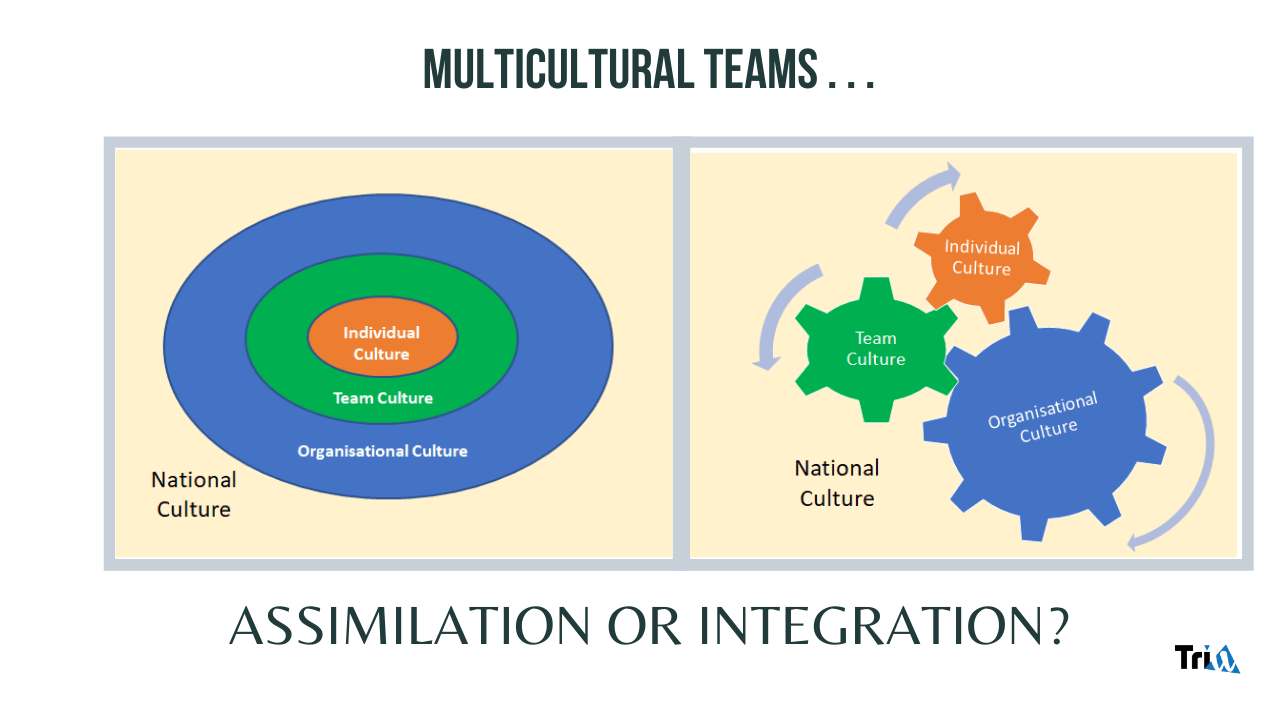
Some leaders have resulted to the assimilation option: “irrespective of your cultural background, this is the way we work!” Individual cultures (of team members) are swallowed up by the team culture. Those individuals are expected to be compliant or they find another job. Indeed, there are contexts where this could well be be the best option. But what about the lost opportunities and potentials in creativity? Is it realistic in the first place that cultures are assimilated (or rather, they are being suppressed)? Sometimes, this situation also applies to team vs organisational cultures, and organisational vs national cultures. Could there be a better way? What about the alternative of integration? Project and organisational leaders can dynamically integrate the diversity of cultures into the project / organisational culture for a more competitive front. Arguably, this will be more realistic and sustainable.